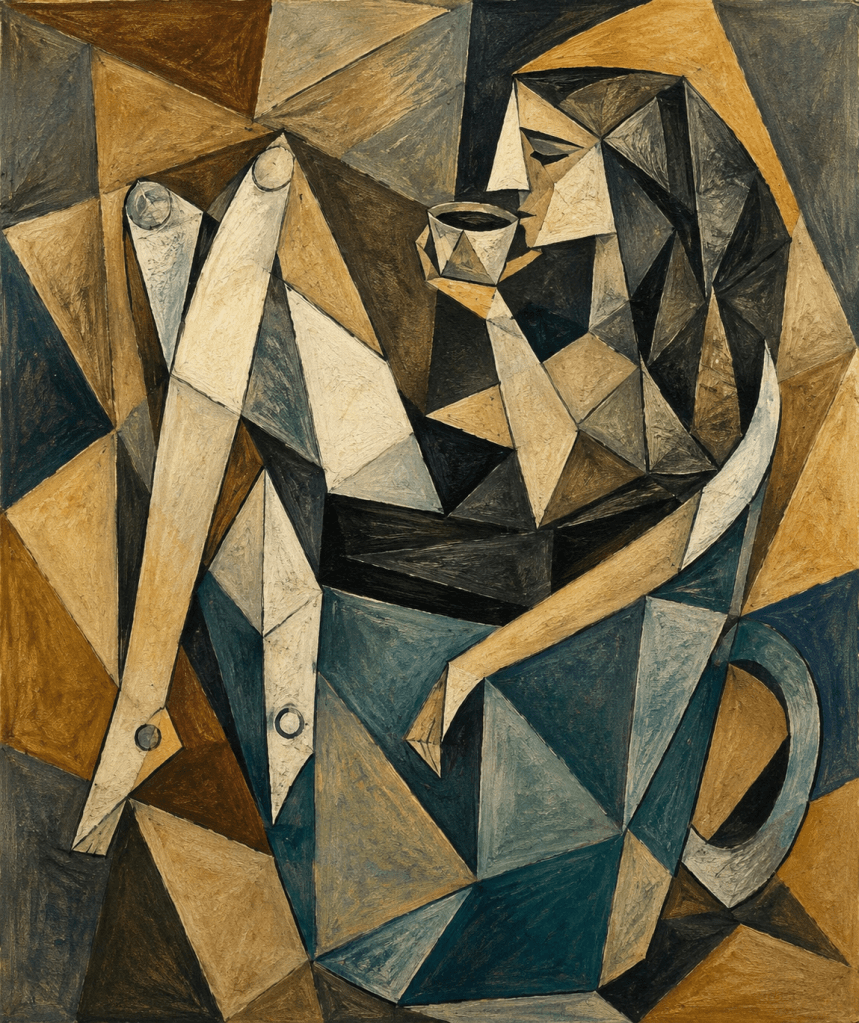
Is a little chaos actually good for us?
Imagine stepping into a Parisian gallery in the early twentieth century. You are surrounded by paintings where faces are fractured into geometric pieces, proportions are stretched like pulled taffy, and gravity seems entirely forgotten.
Yet, we are taught from childhood to color inside the lines, so imagine how unsettling these paintings must have seemed—broken, distorted, perhaps even entirely chaotic.
But Picasso, Modigliani, and Chagall did not rush to correct every unusual line. They allowed the distortion to remain. They did not erase the unexpected shapes or force the figures back into familiar proportions. They gave those choices room to become part of the painting, until what first appeared chaotic revealed an entirely new way of seeing the world.
We do not always give ourselves that same grace.
When a day falls apart, when stress stretches our patience thin, or when carefully laid plans shatter, we panic. We notice one misplaced stroke and immediately declare the entire painting ruined. We call it a tragedy before the picture is even complete.
But what if disruption is not the destruction of your story? What if it is simply the moment the brush takes an unexpected turn, inviting you to shape something far more interesting than the rigid and predictable picture you originally planned?


Leave a Reply